A single deck, one joker card, and two sides of a table separate a beginner from a player who understands what actually drives the odds in Andar Bahar. Most newcomers assume this is a pure guessing exercise, a coin flip dressed up with Indian playing cards. That assumption costs them money. The real structure of the game rewards those who understand how card counts shift the probabilities as a round unfolds.
Andar Bahar traces its roots to South India, where it was played informally with a physical deck long before online casinos digitized it. The mechanics stayed simple by design - that simplicity is exactly why it spread so fast across betting platforms. But simple does not mean shallow. Once you grasp the andar bahar game rules properly, you start noticing patterns in how dealers distribute cards and how probability shifts card by card. Players who want a live demonstration of these mechanics in action can find out more through platforms offering a structured, transparent version of the game. What follows is a complete breakdown of how the game works, how betting operates, and which strategic approaches actually hold up under scrutiny.
Understanding Andar Bahar: Origins and Basic Concept
Where the Game Comes From
Andar Bahar originated in Karnataka and spread through southern India as a social card game played at gatherings and festivals. Its name translates roughly to "inside" (Andar) and "outside" (Bahar), referring to the two sides where cards are dealt. The game required nothing more than a standard deck, making it accessible to virtually anyone, which explains its long survival before the digital era gave it a second life.
Why It Became Popular Online
The transition to online andar bahar game formats happened for practical reasons. Rounds finish in under a minute, the rules translate directly to a screen without losing anything in the process, and live dealer technology recreates the physical experience convincingly. Operators favor it because turnover is fast; players favor it because there is no steep learning curve standing between them and their first bet.
The Role of the Joker Card
Every round begins with a single card drawn and placed in the middle - this is the joker, sometimes called the house card. It sets the target rank that both sides are trying to match first. Nothing else in the game happens until this card is revealed, since every subsequent decision, including where to place a bet, depends on it.
Core Andar Bahar Game Rules Explained
Setting Up the Table
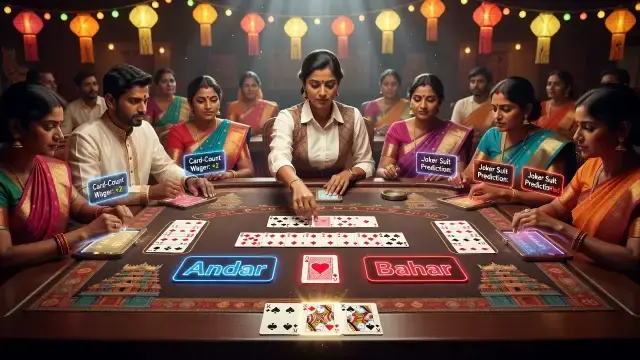
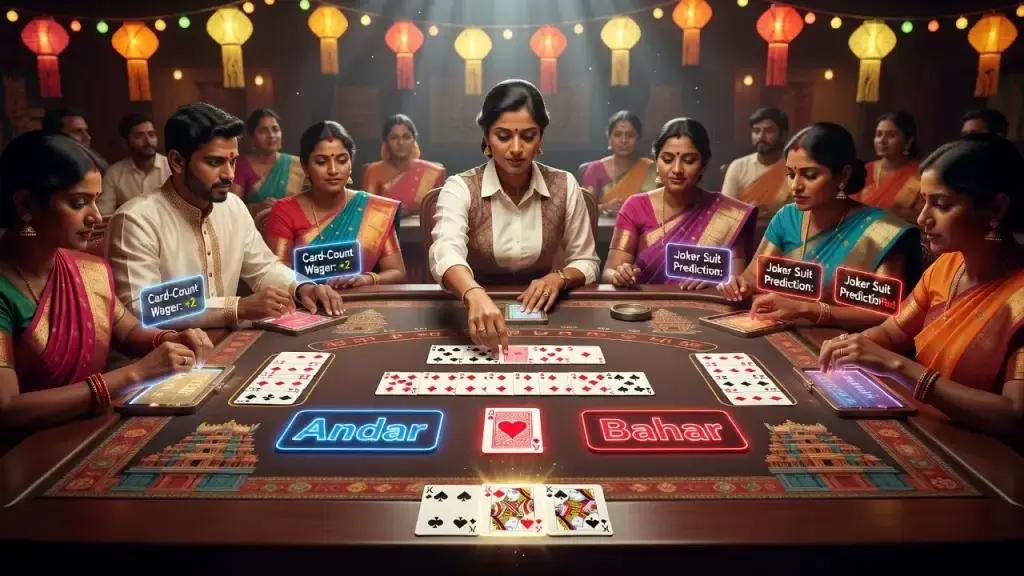
A standard 52-card deck is used, occasionally supplemented with additional decks in online formats to speed up long sessions. The table is divided into two clearly marked betting zones - Andar and Bahar - with the joker card displayed prominently between them. Suits carry no weight in this game; only rank matters.
How a Round Unfolds
After the joker card is revealed, the dealer begins placing cards alternately into the Andar and Bahar piles. The starting side depends on the joker's suit color in most variants - red joker starts on Bahar, black joker starts on Andar, though house-specific conventions can vary slightly. Cards continue to fall until one pile produces a card matching the joker's rank. That side wins the round instantly.
Winning Conditions
There is no ambiguity in how a round ends. The first matching card, regardless of which pile it lands in, determines the outcome. A round can end after a single card if luck favors the bettor, or it can extend through most of the deck if the matching rank stays hidden. This variability is central to understanding andar bahar card game rules and why payout structures differ between the two sides.
Number of Players and Variants
The base version accommodates unlimited players since everyone bets against the house rather than against each other. Several variants exist - some introduce side bets on the exact card count before a match occurs, others add multiple joker cards for faster resolution. Each variant modifies pacing but not the fundamental logic of matching ranks.
Andar Bahar Betting Rules and Payout Structures
Placing Your First Bet
Betting occurs before the dealing begins, once the joker card is shown. Players choose Andar or Bahar and commit their stake before a single card touches either pile. There is no in-round adjustment - once dealing starts, the bet is locked.
How Payouts Differ Between Andar and Bahar
Because the starting side has a statistically higher chance of an early low-card resolution, payouts are asymmetric. Bahar typically pays slightly better odds than Andar to compensate for its marginally lower win probability. This asymmetry is the first thing serious players learn when studying andar bahar betting rules, since ignoring it means leaving expected value on the table.
Side Bets and Additional Wagers
Many online tables offer side bets on how many cards will be dealt before a match, or on whether the winning card will be from a specific suit. These carry higher variance and lower win frequency, appealing to players chasing larger payouts rather than steady returns.
- Main bet: Andar or Bahar, resolved by the first matching rank
- Card-count side bet: wager on the total number of cards dealt before resolution
- Joker suit side bet: prediction tied to the suit of the house card
- First card bet: available in some variants, betting on the very first card dealt matching the joker
Super Andar Bahar Strategy: Practical Approaches
Reading the Odds as the Round Progresses
Every card dealt without a match changes the remaining probability distribution. If several cards of a certain rank have already appeared elsewhere, the odds of hitting that rank drop for whichever pile is still waiting. Players who track this in real time, rather than betting purely on instinct, make measurably better decisions over a session.
Bankroll Management as the Foundation
No super andar bahar strategy holds up without disciplined stake management. Setting a fixed session budget, dividing it into unit bets, and refusing to chase losses after a bad run are not exciting rules, but they are the ones that keep players in the game long enough for skill to matter more than luck.
Balancing Main Bets and Side Bets
A sound approach treats side bets as occasional, small-stake additions rather than a primary income source. The variance on these wagers is high enough that relying on them consistently erodes a bankroll faster than the main Andar/Bahar bet ever would.
Adjusting Strategy for Live vs. Automated Dealers
Live-dealer tables move slightly slower, giving players more time to track dealt cards and adjust their next bet. Automated versions move faster and rely more heavily on random number generation without visible card history, which shifts the strategic emphasis toward strict bankroll discipline over card-counting logic.
Playing Andar Bahar Online: What Changes on Digital Platforms
Random Number Generation vs. Live Dealers
Digital versions of the game split into two categories: RNG-based tables that shuffle and deal virtually, and live-streamed tables with a real dealer and physical cards. The core andar bahar game rules stay identical, but the ability to observe card patterns differs significantly between the two formats.
Speed and Session Pacing
Online rounds move noticeably faster than in-person games, since there's no physical shuffling delay and betting windows are timed tightly. This pace suits players who prefer quick, repeated rounds but requires stricter self-imposed limits to avoid rapid, unplanned losses.
Interface Features That Affect Strategy
Most platforms display running statistics - how often Andar or Bahar has won recently, average card counts per round, and joker distribution history. These tools support a more analytical approach to the online andar bahar game, giving players data that would be far harder to track manually at a physical table.
Common Mistakes Players Make
Betting Without Tracking Card History
Many players treat every round as an isolated event, ignoring the compounding statistical information available from prior rounds. This overlooks one of the few genuine edges available in a game otherwise governed by chance.
Overvaluing Side Bets
The appeal of a large payout on a card-count or suit-based side bet often overrides sound judgment. These bets should supplement a strategy, not define it.
Ignoring the Andar-Bahar Payout Asymmetry
Players who bet on Andar and Bahar with equal frequency, without accounting for the payout difference, are working against themselves mathematically. Small margins compound over dozens of rounds.
Frequently Asked Questions
Is Andar Bahar a game of pure luck, or does skill matter?
Chance determines each individual card, but skill enters through bankroll management, bet timing, and reading how remaining card probabilities shift as a round progresses. Skilled players don't beat the odds outright, but they minimize unnecessary losses far better than casual players.
Why do Andar and Bahar have different payout rates?
The side that deals first statistically has a marginally higher chance of an early match, so operators adjust payouts to balance the house edge between both options. This asymmetry is standard across nearly all reputable platforms offering the game.
Can card counting actually work in Andar Bahar?
To a limited degree, yes - tracking which ranks have already appeared helps estimate the remaining probability of a match on either side. It won't guarantee wins, but it sharpens decision-making compared to betting blind each round.
What's the safest way to start playing online?
Begin with small, fixed-unit bets on the main Andar/Bahar wager only, avoid side bets until you understand table patterns, and set a strict loss limit before you start a session. This approach protects your bankroll while you learn the pacing of online tables.
Do live dealer tables offer better odds than automated ones?
Not inherently - the mathematical odds are set by the rules, not by whether a human or a random number generator deals the cards. The practical advantage of live tables is the ability to visually track dealt cards, which supports better-informed betting decisions.
How many cards typically get dealt before a round ends?
There's no fixed number - a round can end on the very first card or extend through most of the deck. This unpredictability is part of what makes card-count side bets appealing, though also riskier than the main wager.