A single percentage point in RTP can shift long-term returns by thousands of coins over a year of regular play. That gap explains why serious players stop asking "is this game fun" and start asking "what does the math actually say." Fortune Coins RTP sits at the center of that conversation, because it determines how much of every wagered coin theoretically returns to players across extended sessions.
Sweepstakes-style slots like this one operate under different regulatory framing than traditional real-money casino games, yet the underlying mathematics work the same way. Random number generators, paytables, and volatility settings all combine to produce a predictable long-term outcome, even though short sessions feel anything but predictable. Anyone comparing titles before committing time or coins should check the fortune coins rtp listed by the platform, since that figure frames realistic expectations far better than marketing copy or screenshots of big wins ever could.
This piece breaks down what RTP actually measures, how Fortune Coins' specific percentage compares to industry norms, why volatility matters just as much as the headline number, and how payout structure affects the experience of spinning session after session. The goal is a clear, honest picture - not hype, not fear, just the numbers and what they mean for someone deciding how to spend their coins.
What RTP Means and Why It Matters
Defining Return to Player in Simple Terms
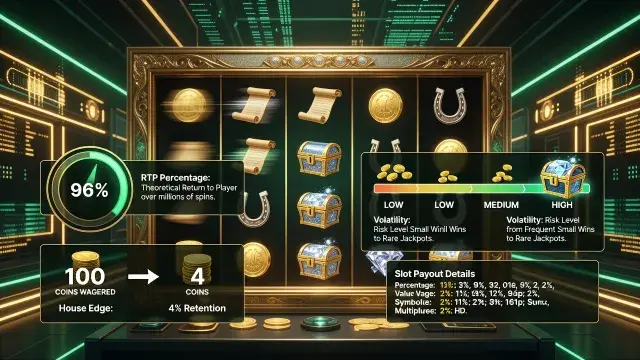
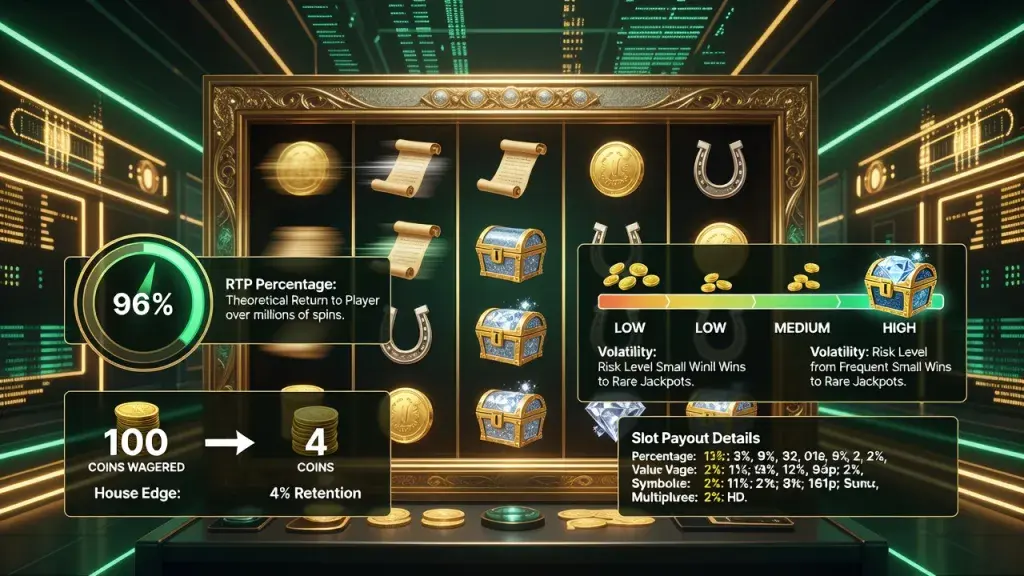
Return to Player is a theoretical percentage calculated over millions of simulated spins, showing how much of all wagered coins a slot returns to players over time. An RTP of 96% means that, across a massive sample size, the game returns 96 coins for every 100 wagered, with the remaining 4 coins representing the built-in house edge. This number never predicts what happens in a single session - it describes a mathematical average that only becomes visible over very large volumes of play.
How RTP Is Calculated by Developers
Game studios calculate RTP during development by running exhaustive simulations of the paytable, symbol weightings, and bonus trigger frequencies. Every symbol combination, every free-spin multiplier, and every jackpot contribution gets modeled mathematically before the game ever reaches a player's screen. The fortune coins game return to player figure published by the operator reflects this pre-launch modeling, audited to confirm the game behaves as designed once live.
Why Players Should Care About This Number
Ignoring RTP is like ignoring interest rates on a loan - the number quietly shapes outcomes whether or not you pay attention to it. Players who track RTP make better decisions about which games deserve their time and coins, especially when comparing multiple titles with similar themes but different payout structures. A higher fortune coins RTP percentage doesn't guarantee a win in any given session, but it does mean the odds lean slightly less against the player over the long run.
- RTP is theoretical, calculated over millions of spins, not a session guarantee
- Higher RTP reduces the house edge, improving long-term player value
- Published RTP figures are typically audited by independent testing labs
Fortune Coins Slot RTP Explained
Where the Official RTP Figure Comes From
The fortune coins slot RTP published by the platform or game provider comes from the same simulation-and-audit process used across the sweepstakes and social casino industry. Independent testing agencies review the random number generator and paytable logic to confirm the advertised figure matches actual game behavior. Players can typically find this number in the game's information panel or paytable screen, sometimes labeled simply "RTP" or "theoretical return."
Comparing It to Industry Averages
Most online slots, whether real-money or sweepstakes-based, cluster somewhere between 92% and 97% RTP. Games below that range tend to feel punishing over time, while anything above 97% is considered generous by industry standards. Fortune Coins positions itself within this competitive band, which places it in reasonable company alongside other established slot titles rather than as an outlier in either direction.
Does the RTP Vary Across Different Fortune Coins Titles?
Sweepstakes platforms rarely operate a single slot - they host a library of titles, each with its own paytable and math model. This means the RTP figure for one Fortune Coins game will not necessarily match another in the same collection. Checking the specific game's info screen before extended play avoids the mistake of assuming a flat, uniform percentage across the entire platform.
Understanding Fortune Coins RTP Percentage in Practice
Translating Percentage Into Real Session Outcomes
A 95% RTP does not mean a player gets back 95 coins after wagering 100 in one sitting. It means that across a statistically significant number of spins - often tens of thousands - the average return converges toward that figure. Short sessions can swing wildly above or below this number, which is exactly why volatility, covered later, matters just as much as the raw percentage.
How Bet Size Interacts With RTP
The fortune coins RTP percentage stays fixed regardless of bet size in most standard slot configurations, but the felt impact of variance grows with larger wagers. Betting bigger amounts per spin doesn't change the theoretical return, but it does increase the size of individual swings, both up and down. Players managing a limited coin balance often do better spreading bets across more spins rather than concentrating value into fewer, larger ones.
Reading the Paytable Alongside RTP
RTP alone doesn't tell the full story - the paytable shows how that return gets distributed. A game might hit its RTP target through frequent small wins or through rare large payouts, and the paytable reveals which pattern applies. Cross-referencing the stated percentage with the actual symbol payouts gives a more complete sense of what to expect during typical play.
Fortune Coins RTP Volatility and Risk Profile
What Volatility Actually Measures
Volatility, sometimes called variance, describes how payouts distribute over time, independent of the overall RTP figure. A low-volatility slot pays smaller amounts frequently, smoothing out the experience, while a high-volatility slot pays rarely but with larger sums when it does hit. Fortune Coins RTP volatility settings shape the emotional texture of play far more than the RTP percentage itself, since two games with identical RTP can feel completely different depending on their variance profile.
Low, Medium, and High Volatility Compared
- Low volatility: frequent small wins, longer play sessions, fewer dramatic swings
- Medium volatility: balanced mix of moderate wins and occasional larger hits
- High volatility: long dry spells punctuated by significant payout spikes
Fortune Coins titles generally fall into the medium-to-high range, favoring players who enjoy anticipation-building gameplay over steady, incremental returns.
Matching Volatility to Your Playing Style
Players managing a smaller coin balance and looking to extend playtime typically fare better on lower-volatility games, since the swings are gentler and the balance depletes more slowly. Those chasing bigger single hits and comfortable with longer losing stretches tend to gravitate toward higher-volatility options. Knowing your own tolerance for risk before selecting a game prevents the frustration of mismatched expectations.
Slot Payout Structure and Bonus Mechanics
Base Game Payouts vs. Bonus Round Contributions
A meaningful portion of a slot's total RTP often comes from bonus features rather than the base game alone. Free spins, multipliers, and pick-style bonus rounds can contribute a significant share of the theoretical return, meaning a player who never triggers these features experiences a noticeably different effective RTP than the published average suggests. Understanding this split clarifies why some sessions feel dry even on a well-rated game.
Jackpots and Their Effect on Overall RTP
Progressive or fixed jackpots factor into the overall fortune coins game return to player calculation, but their rarity means most individual sessions never touch that portion of the return. The jackpot's contribution gets averaged across an enormous number of spins, so its presence inflates the headline RTP number without meaningfully affecting the typical player's day-to-day results.
How Payout Frequency Shapes the Play Experience
Payout frequency - how often a spin produces any win at all, regardless of size - differs from both RTP and volatility, though it correlates with both. A game can have frequent small payouts and still carry high volatility if its bonus round occasionally delivers outsized rewards. Watching how often a title pays anything, however small, offers a practical, on-the-ground sense of its rhythm that raw statistics don't fully capture.
How to Use RTP Data to Choose the Right Fortune Coins Game
Checking In-Game RTP Information Before Playing
Most reputable platforms display RTP directly within the game's paytable or information menu, usually accessible through a small "i" icon or settings tab. Taking thirty seconds to check this before committing coins prevents the common mistake of judging a game purely by its theme or visual appeal.
Balancing RTP, Volatility, and Personal Bankroll
The smartest approach weighs all three factors together rather than fixating on RTP alone. A high RTP paired with punishing volatility can still drain a small bankroll quickly, while a slightly lower RTP with gentle variance might preserve playtime and enjoyment far better. Setting a session budget and matching it against the game's risk profile produces more consistent, satisfying outcomes than chasing the single highest percentage available.
Recognizing Marketing Claims vs. Verified Data
Not every promotional claim about "loose slots" or "best payouts" reflects audited data. Verified RTP figures come from independent testing labs and appear in official game documentation, not from promotional banners. Cross-checking any advertised figure against the in-game paytable remains the most reliable way to confirm accuracy before investing significant time.
Frequently Asked Questions
Is Fortune Coins RTP the same across every device?
Yes, RTP is programmed into the game's core math model, so it stays consistent whether played on desktop, mobile browser, or app. Device type affects display and control layout, not the underlying probability engine.
Can RTP change over time on the same slot?
Generally no - once a game is certified and released, its RTP remains fixed unless the developer issues an updated version with a modified paytable. Any change would typically be disclosed and re-audited rather than applied silently.
Does higher volatility mean a game is rigged against players?
No, volatility simply describes payout distribution patterns, not fairness. A high-volatility game can have excellent RTP; it just delivers that return through fewer, larger wins rather than steady small ones.
Why did I lose money on a slot with a high published RTP?
RTP is a long-term average calculated over massive spin counts, so short sessions can easily fall well below or above that figure. Losing on a high-RTP game during one sitting doesn't contradict the statistic - it reflects normal short-term variance.
How can I verify that a stated RTP is accurate?
Look for certification from independent testing labs, often referenced in the platform's terms or fairness page, and cross-check the figure shown in the in-game paytable. Consistency between these sources is a reasonable indicator of accuracy.
Should I only play the highest-RTP game available?
Not necessarily - volatility and your own bankroll matter just as much. A slightly lower RTP with gentler variance might suit limited playtime or budget better than a high-RTP, high-volatility title that can deplete a balance quickly.