
A four-leaf clover carries roughly one in ten thousand odds of appearing in nature. Blazing Clover borrows that same rarity logic and turns it into a payout structure where the biggest wins hide behind mechanics most players never bother to study. That gap between casual spinning and informed play is exactly where the money gets left on the table - or picked up, depending on which side of the learning curve you sit on.
This piece breaks down what actually drives high payout bonus rounds in Blazing Clover, why certain bet patterns extend playtime without sacrificing upside, and how session structure changes your realistic odds of hitting a standout round. None of this replaces the randomness built into the game's engine, but understanding the mechanics gives you a framework instead of a guess. For players who want to see the exact payout tiers and bonus thresholds mapped out in detail, the 100 blazing clover max win reference breaks down the multiplier ceiling and how it interacts with bonus triggers. From there, the rest of this guide focuses on the strategic layer: bankroll pacing, bonus timing, and the specific clover slot tips that separate deliberate players from those spinning on autopilot.
What follows is organized around five practical pillars: understanding the game's core mechanics, building a max win strategy around volatility, optimizing bonus round decisions, managing bankroll for sustained high payout attempts, and avoiding the common mistakes that quietly erode returns.
Understanding Blazing Clover's Core Mechanics
Reel Structure and Symbol Weighting
Blazing Clover runs on a weighted reel system where high-value symbols - the clovers themselves, along with wilds and scatters - appear less frequently than filler symbols like standard card icons. This weighting is what creates the game's volatility profile. A tighter distribution of high-value symbols means longer stretches without meaningful wins, but it also means the payouts, when they land, hit harder. Recognizing this trade-off early prevents the common mistake of judging the game's potential from a short session.
Paylines and Win Multipliers
The game's payline structure rewards clustered clover symbols across active lines, with multipliers scaling based on how many lines connect simultaneously. Multiplier scaling is not linear - a three-symbol line pays modestly, but a five-symbol combination across multiple active paylines can multiply the base win several times over. This nonlinear scaling is central to any max win strategy, because it means bet size and active payline count matter more than spin frequency alone.
RTP and Volatility Profile
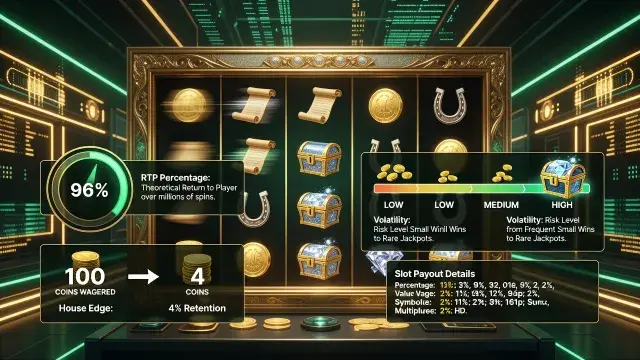
Return-to-player percentage tells you the long-run average, but volatility tells you how that average gets distributed across sessions. Blazing Clover sits on the higher end of volatility among clover-themed slots, meaning fewer frequent wins but a higher ceiling on individual payouts. Players chasing a high payout bonus round need to accept longer dry spells as the cost of admission to bigger potential swings.
Building a Max Win Strategy
Bet Sizing for Maximum Bonus Potential
Bonus triggers in Blazing Clover are typically tied to scatter combinations, and scatter frequency does not scale with bet size - but the payout ceiling during the bonus does. This means smaller, more frequent bets can be used to hunt for the trigger, while a calculated bet increase right before or during a bonus round captures more value from the multiplier structure. A max win strategy built on this asymmetry outperforms flat betting across the board.
Session Length and Variance Management
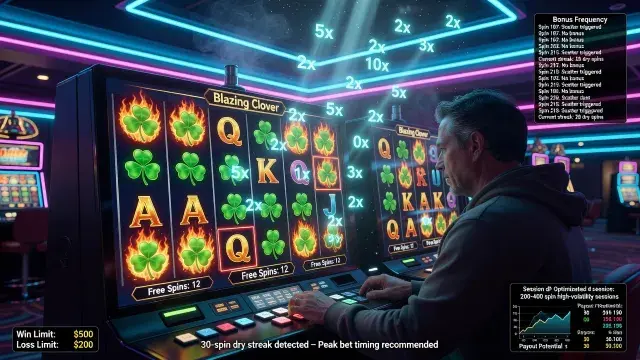
Short sessions rarely see the full range of Blazing Clover's variance. Because the high payout bonus depends on relatively rare scatter alignments, players need enough spins to give those events a realistic chance of occurring. Structuring play around 200-400 spin sessions, rather than quick 20-spin bursts, gives the volatility profile room to express itself in either direction.
Timing Your Peak Bets
- Increase bet size gradually after a dry streak of 30+ spins without a bonus signal, since near-miss patterns often cluster before a trigger
- Reduce bet size immediately after landing a high payout bonus to protect the win
- Avoid escalating bets purely on emotion after a loss streak - this is the fastest path to bankroll depletion
Optimizing High Payout Bonus Rounds
Reading Bonus Round Triggers
Blazing Clover's bonus round activates through a specific scatter combination, usually three or more clover scatters landing simultaneously across the reels. Some versions include a near-miss indicator, a visual cue showing when the reels almost aligned for a trigger. Learning to recognize these cues helps players time their bet adjustments rather than reacting randomly.
Maximizing Free Spin Value
Once inside the bonus round, free spins often come with an embedded multiplier that increases with consecutive wins. The strategic move here is resisting the urge to end the session immediately after the bonus - many players cash out too early, missing the compounding effect of consecutive multiplier increases within the same bonus sequence.
Stacking Multipliers Effectively
When multiple multipliers stack during a single bonus round, the order of resolution matters. Some engines apply multipliers additively, others multiplicatively. Blazing Clover uses a multiplicative stack during its bonus phase, which is precisely why the top-tier payouts during bonus rounds can dwarf base-game wins by a significant margin.
Bankroll Management for Sustained High Payout Attempts
Setting Realistic Win and Loss Limits
A disciplined bankroll plan separates players who last long enough to hit a high payout bonus from those who deplete their funds before variance turns in their favor. A common approach: set a loss limit at 20% of session bankroll and a win target at 50% above starting balance, then stop regardless of momentum.
Allocating Bankroll Across Sessions
Splitting a total bankroll into smaller session-sized portions - rather than risking it all in one sitting - increases the number of independent attempts at triggering the bonus. Since each spin is statistically independent, more sessions mean more opportunities for the rare high-value alignment to occur.
Tracking Results to Refine Strategy
Keeping a simple log of bet size, session length, and bonus frequency reveals patterns in your own play that generic advice cannot. Over enough sessions, this record becomes the most reliable tool for adjusting your personal max win strategy.
Common Mistakes That Undermine Clover Slot Tips
Chasing Losses with Bigger Bets
Doubling bets after a loss to "catch up" ignores the fact that each spin carries no memory of previous outcomes. This mistake accelerates bankroll loss without improving the odds of triggering a bonus.
Ignoring Volatility Warnings
Players who expect frequent small wins from a high-volatility game like Blazing Clover often quit before the variance has a chance to swing toward a payout. Matching your expectations to the game's actual volatility profile prevents premature exits.
Misreading Bonus Frequency
Assuming a bonus is "due" after a long dry spell is a misunderstanding of independent probability. Each spin's odds remain constant regardless of history, and betting strategy should reflect that reality rather than superstition.
Frequently Asked Questions
What makes Blazing Clover different from other clover-themed slots?
Its multiplicative multiplier stacking during bonus rounds sets it apart, allowing consecutive wins within a bonus sequence to compound rather than simply add together. This structure creates a wider gap between average wins and top-tier payouts compared to lower-volatility clover slots.
How many spins should I budget for before expecting a bonus round?
Because scatter-based triggers are inherently rare, a realistic budget spans 200 to 400 spins per session to give the volatility profile room to play out. Fewer spins than that often produce misleading impressions of the game's true payout rhythm.
Does increasing my bet size improve my chances of triggering the bonus?
No, scatter frequency is independent of bet size in most configurations of this game. What increases with bet size is the payout value once the bonus triggers, not the likelihood of triggering it.
Is it better to bet small and long, or big and short?
Betting small across a longer session generally gives more opportunities for the bonus trigger to occur, since it preserves bankroll across more spins. Reserving larger bets for moments immediately surrounding a suspected trigger balances exposure with potential reward.
Should I cash out immediately after triggering the bonus round?
Ending the session too early sacrifices the compounding effect of consecutive multiplier increases within the bonus sequence. It's generally better to let the bonus round play out fully before deciding whether to continue or stop.
Can tracking my own play data actually improve results?
Yes, logging bet size, session length, and bonus frequency over many sessions reveals personal patterns that generic strategy advice cannot capture. This data-driven approach helps refine bet timing and session pacing specific to your own play style.